Sundarbans is the world’s largest halophytic mangrove forest and delta covered with vast saline mud flats. Declared as a world heritage by UNESCO; it is situated on the lower end of Gangetic West Bengal. The park is bounded by the River Hooghly in the west, River Raimangal in the east and Bay of Bengal in the south. The dense forest of Sundarbans is blessed with the large number of Sundari trees and it is believed that the forest derived its name from these beautiful trees. It is a land of 54 tiny islands that is formed by the tributaries of the river Ganges.
History at a Glance
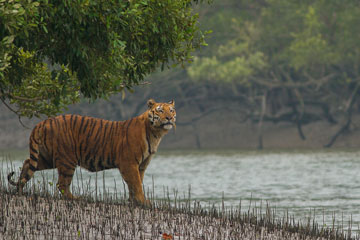
Attractions & Activities : Sundarbans is the home for Royal Bengal Tigers, those who have adapted themselves to surviving in Sundarbans and developed the ability to swim in the saline water. It is the only mangrove forest in the world having the tiger as its inland population. Wildlife flourishes in Sundarbans with more than 58 species of mammals, 54 species of reptiles and around 248 bird species.
The main attraction here is the Royal Bengal Tiger but its real beauty lies in the many novel fashions in which land and water meet. The glory of Sundarbans is its varied wildlife that reflects many a spectacle. The dense mangrove forest is home to a variety of animals like deer, kingfishers, jungle fowl, wild boar, lizards, and monkeys and ample of beautiful birds. The van is the perfect destination for botanists, nature lovers, poets and painters. So it’s left to you to unravel the mystery of the jungle.
People of Sundarban : : The people of Sundarbans are unique in their lifestyle, occupation, faith, rituals and beliefs. The story of the Sundarbans is older than that of the forest goddess Banobibi. The villagers living adjoining the forest are primarily dependent on agriculture. Living and working in the Sundarbans is dangerous, people living here fight with the nature day in and day out. The story of Sundarbans women’s remains untold as you can experience the hardship of daily existence ultimately that has given rise to brotherly feelings and non-communal traditions.
What to See : Tiger Reserve Project: Sprawl over an area of 2585 Sq.Km, the tiger reserve of the Sundarban National Park is blessed with largest population of tiger in India. If you are lucky you can view the tigers because they seldom emerge out of their habitats. More interesting fact about these tigers here is they can swim and eat fish. You can enjoy the spectacular view of the Raimongal River.
Sajnekhali Bird Sanctuary: The sanctuary is located between the Gomti River and Peechkali. Here you can enjoy the chirping of birds and it is possibly only one place in the Sundarbans where you can walk. You can also visit Mangrove Interpretation centre.
Tiger Adventure in Sundarban National Park
Welcome to the world largest colony of the Royal Bengal Tiger where you are going to experience the thrill for a lifetime. Sundarbans is the home for Royal Bengal Tigers, those who have adapted themselves to surviving in Sundarbans and developed the ability to swim in the saline water. It is the only mangrove forest in the world having the tiger as its inland population.
Sundarbans Tour Packages :
Most of you might be looking for the ultimate things to do in Jaisalmer while you are touring this Golden City of Rajasthan. The enchanting city has lot on offer for visitors. It is best known for forts and places, sand castles and numerous facts about the courageous rulers and citizens of the bygone era. Each and every milestone of Jaisalmer has great importance; they are base of widespread existed Indian culture during the medieval era. The city traces its inception in 12th century.
The city boasts of many attractions such as awesome Jaisalmer Fort architecture which exhibits the rich display of artifacts of that era, Bada Bagh, Patwin-ki-Haveli, Sam Sand Dunes and many more to list. Here is a list of what to see while you are in Jaisalmer:


